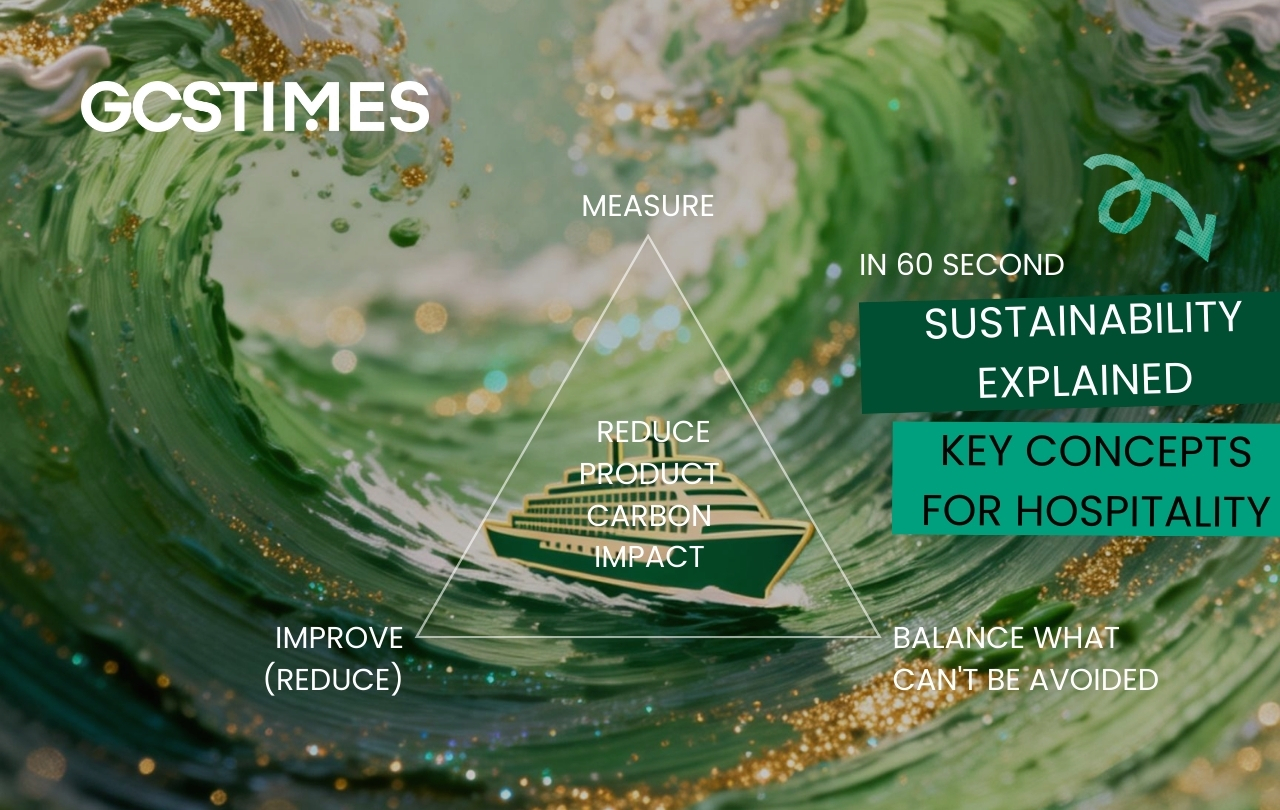
Sustainability in hospitality often sounds complicated, but the basic idea is simple: Every product has a carbon footprint.
From raw materials and manufacturing to shipping and disposal, everyday hotel items all contribute to emissions. Understanding this lifecycle impact is the first step toward making better choices.
How companies reduce product carbon impact? Many sources describe a similar sequence:
1️⃣ Measure
Estimate emissions across the product lifecycle (cradle-to-grave or cradle-to-gate, depending on scope).
2️⃣ Improve (Reduce)
Prioritize direct, verifiable emission reductions through design, operations, and supply-chain changes, as this is the primary focus for credible decarbonization.
3️⃣ Balance what can't be avoided
For truly residual
(hard-to-eliminate) emissions after aggressive reduction efforts, companies may
use high-quality carbon removal credits (e.g., direct air capture, durable
biochar, or enhanced weathering) or support verified projects (e.g.,
reforestation, renewable energy expansion) as part of a broader net-zero or
carbon-neutral strategy.
Guests increasingly expect hotels to demonstrate responsible sourcing, even in small details. Sustainability is a process of continuous improvement. GCSTIMES aims to support our partners in reducing Scope 3 emissions through the following low-carbon hotel products:
• Wooden key cards
• Plant-based leather key cards
• PLA-based key cards
• Wooden fridge magnets
Join the journey with us.