


Historic buildings are finding new lives as hotels. Travelers now sleep within walls that have stood for centuries, in former abbeys, railway stations, schoolhouses, and prisons. The architecture takes center stage through worn stone, weathered brick, faded plaster, and sometimes even the marks left by those who came before.The accommodation there offers an encounter with time.
Yet there is a quiet asymmetry to the experience. The building remains, but the guest moves on.
What travels home with them? Perhaps a photograph, a memory, a name saved in a travel journal. The experience may linger, but the place itself is difficult to carry. Once the door closes behind us, history returns to its walls.
This is where a small, everyday object can take on a different meaning.
A wooden hotel key card, for instance, need not end its life at checkout. Designed to double as a fridge magnet, it moves from one context to another. First, a practical object that grants access to a historic room; later, a keepsake that finds its place in the domestic landscape. On the refrigerator door, among postcards, photographs, and handwritten notes, it becomes a modest reminder of somewhere once visited.
There is also an interesting contrast at work. Salvaged stay draws much of their character from age and continuity through the patina of old materials, the traces of former lives, the sense that a building has outlasted its original purpose. A contemporary access credential belongs to a different moment. Its form, material, and color introduces a small piece of the present into a place shaped by the past.
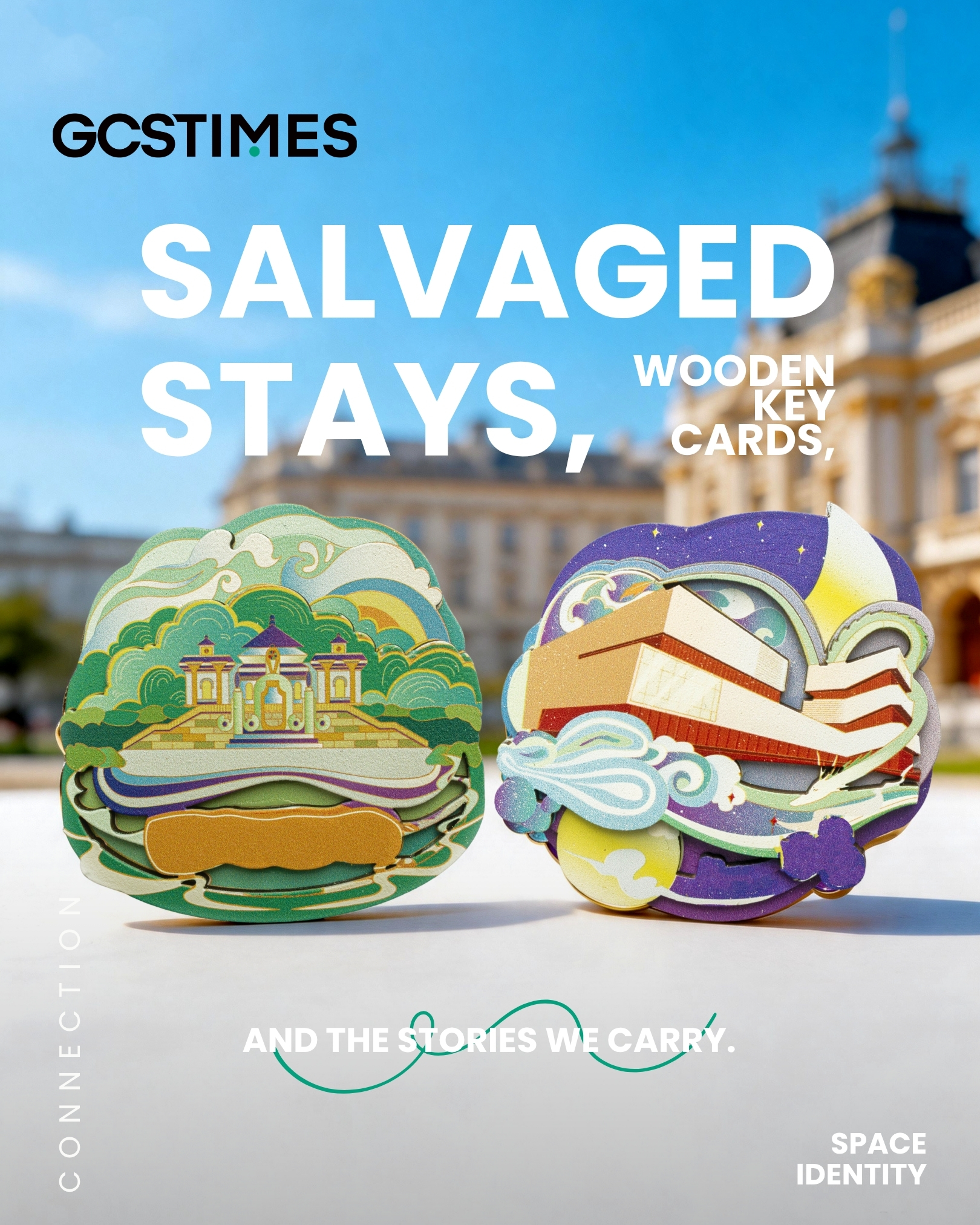
GCSTIMES believes that is part of the appeal. Heritage is not simply something to preserve behind glass or leave untouched. It remains alive when people encounter it, use it, reinterpret it, and carry something of that encounter into their own lives.
The building stays. The guest leaves. But between them, a small piece of wood makes the journey home as a reminder that, for a brief time, the guest was part of its continuing story.


